
Fens 2100+
Nationally significant
As the only place-based programme in England with a dedicated measure in the National Flood and Coastal Erosion Risk Management Strategy, Fens 2100+ is a nationally significant programme, recognising the Fens’ importance to the UK’s economy and food security.
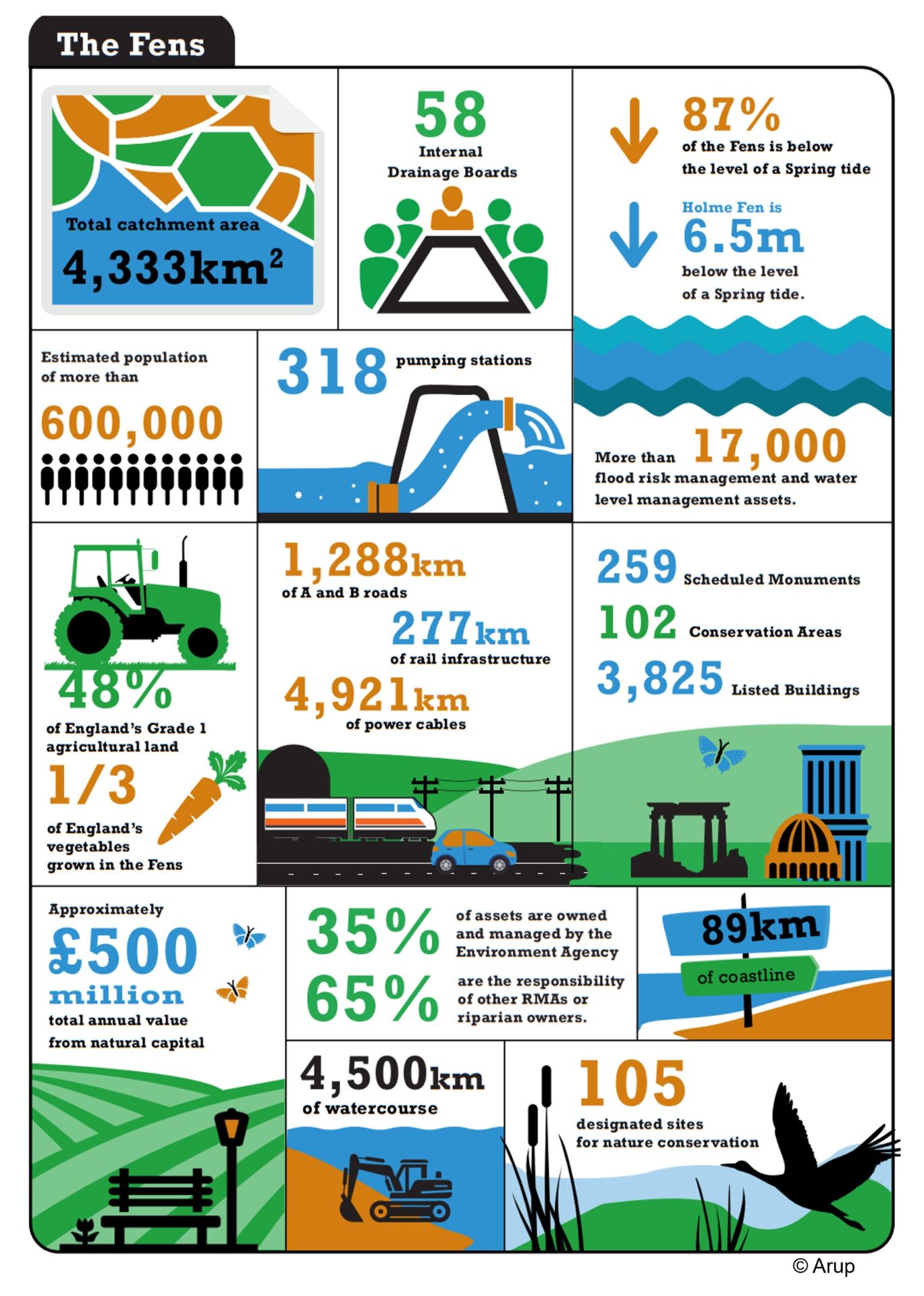
The Fens – facts & figures
Failure to safeguard this region would threaten this intrinsic value, and the lives and livelihoods of more than 600,000 people.
The challenges in the Fens
Much of the Fens lies at or below sea level and relies on constant pumping to remain dry. For decades, water management in the Fens has focused on maintaining and upgrading an extensive network of approximately 17,000 flood and water-level management assets – retaining water for the environment and navigation whilst managing flood risk through embankments, pumping stations and drainage networks.
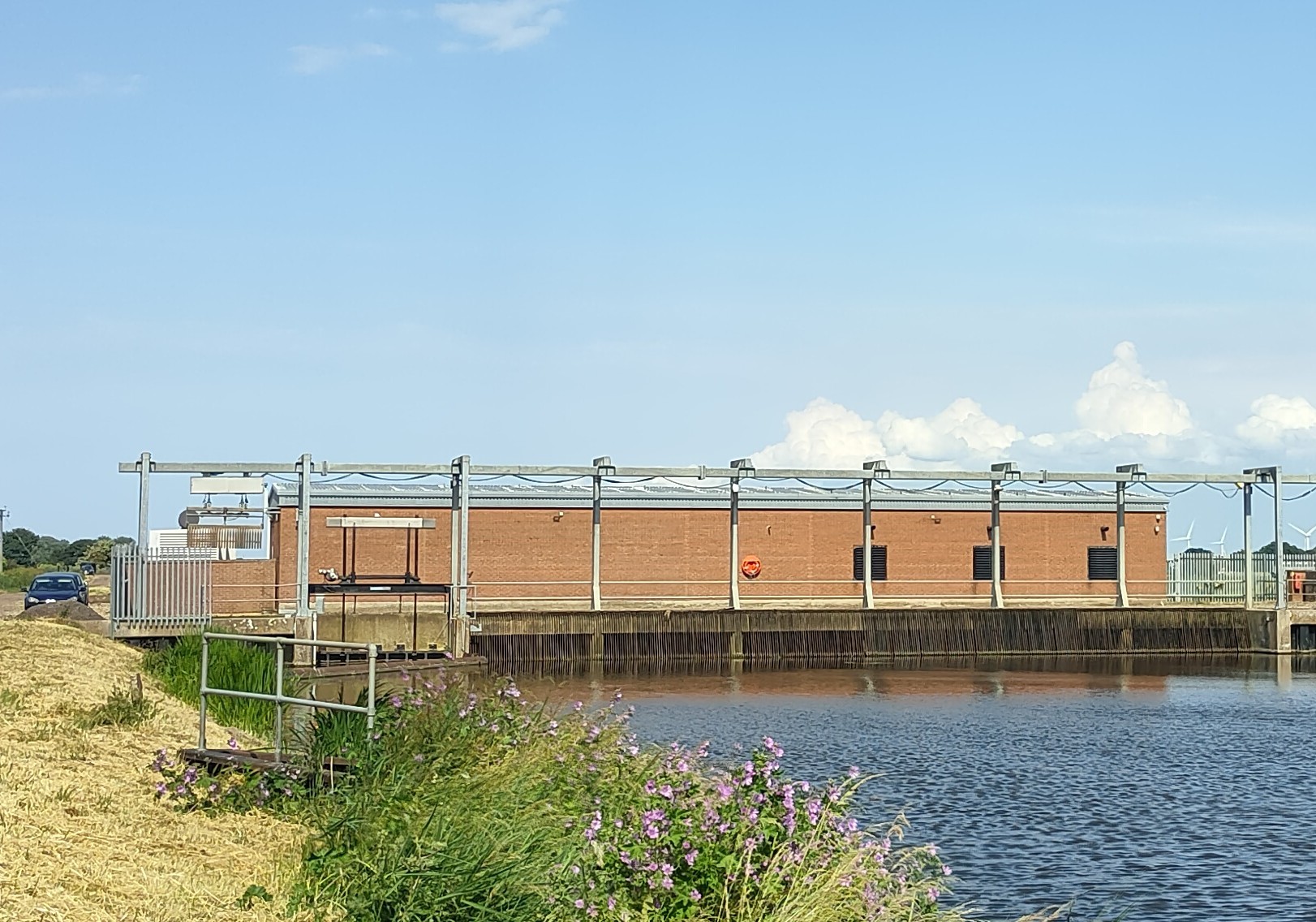
Bevills Leam Pumping Station, built in the 1982
Ageing infrastructure, operational complexity, and competing demands are creating vulnerabilities that hinder efforts to safeguard people, property, and the environment. At the same time, sea levels are rising, rainfall events are becoming more intense, and peat soils are subsiding. As climate pressures increase and infrastructure continues to age, coordinated, long-term action will be essential to safeguard food production, communities and critical infrastructure.
The partnership
Fens 2100+ is an Environment Agency led partnership bringing together the Association of Drainage Authorities (ADA), Internal Drainage Boards (IDBs), local authorities, the National Farmers Union (NFU), Anglian Water, and Natural England to develop a long-term plan to manage future flood risk in the Fens.
The Middle Level is the central and largest part of the Great Level of the Fens. Despite the Old Nene flowing through the heart of the district, these days the Middle Level is part of the catchment of the River Great Ouse, the fourth longest river in England. We sit on the programme board of Fens 2100+, using our knowledge and experience to advise and shape the partnership.
The Partnership builds on the work undertaken by the future fens; flood risk management in the Great Ouse Fens project, aiming to secure a climate resilient future for the whole of the Fens by aligning investment, strengthening system performance, and ensuring the decisions we take today are the right ones.
Catchment Baseline Reports
The Fens 2100+ Partnership have produced a series of catchment baseline reports. They bring together data from partners to explain:
- how the landscape functions today
- the condition and performance of flood risk and water management assets,
- and how risks are changing and escalating due to climate change and ageing infrastructure.
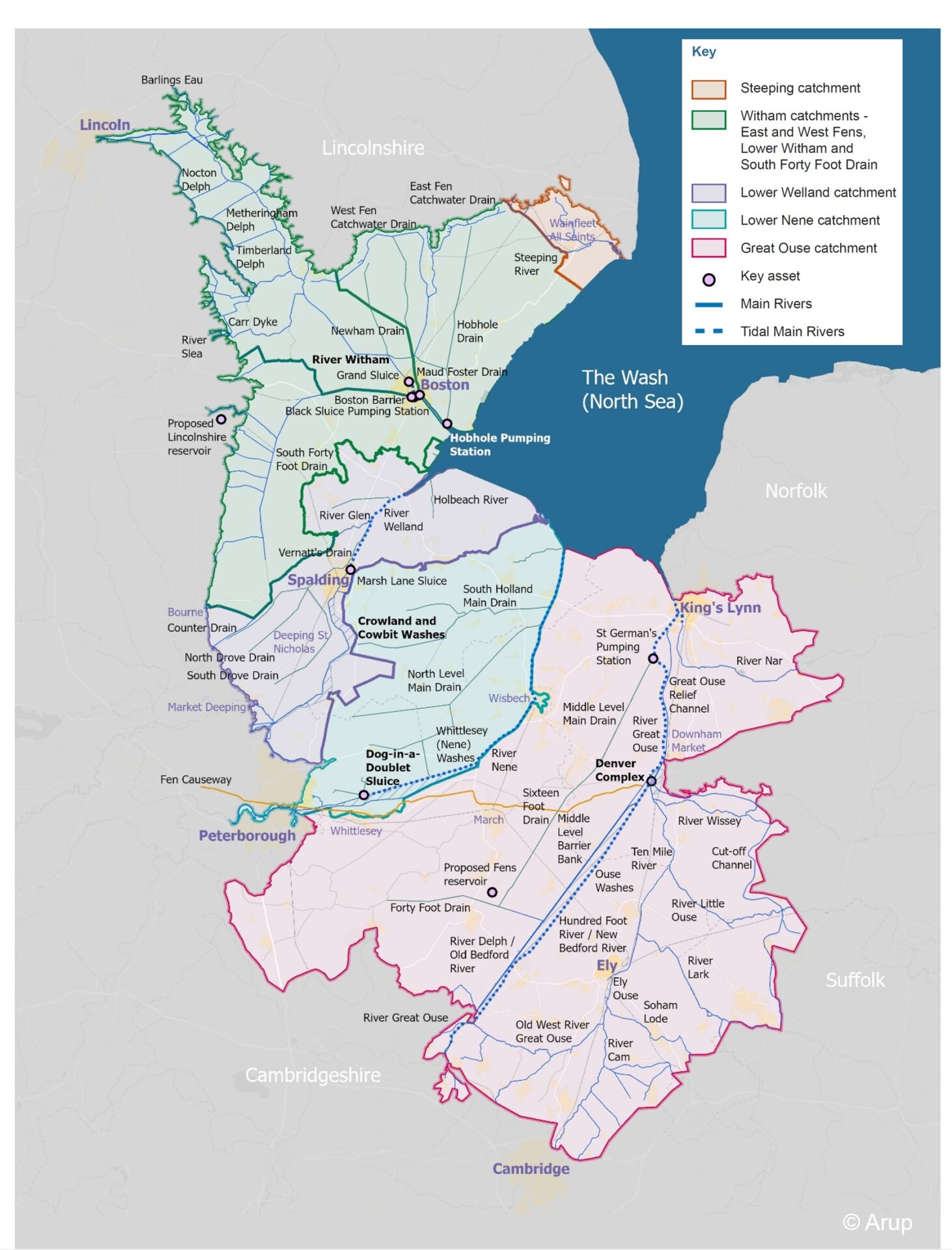
Fens 2100+ study area
The catchment baseline reports provide a common starting point for better decision making, future investment planning and coordinated action. There is also a baseline summary report that outlines evidence from the seven catchment baseline reports. It brings together data and insights from risk management authorities (RMAs) on their experience of managing flood risk assets.
The Great Ouse supplementary baseline contains updated evidence and includes additional information, superseding the original baseline report that was produced as part of the future fens programme.
The baseline reports, including the Great Ouse supplementary baseline report can be accessed on the gov.uk website . Watch our supporting video introducing the baselines below.
Fens 2100+ Baseline Report: A Landscape of National Importance
Case for Change
Building on the evidence in the baselines, the Case for Change underscores why existing approaches to water management are no longer sufficient. The report explains why the Fens urgently need a new, joined-up plan to protect people, businesses, agricultural land, nature and infrastructure from rising flood and climate risks, and sets out a strategic case for continued and enhanced investment in flood risk management across the Fens.
The partnership have produced a video alongside the Case for Change, which explains why long-term adaptation is needed in the Fens.
Case For Change Securing a Climate Resilient & Vibrant Future for the Fens
What comes next?
The next steps for Fens2100+ will be to:
- deliver on the Partnership Action Plan as detailed in the ‘Case for Change’. The action plan offers clear, practical steps that combine near-term risk mitigation with long-term transformation.
- design the ‘Decade of Action’. This will allow the partnership to move at pace and invest in the assets we have, and to develop principles on how to respond and recover from incidents which move away from a ‘fix on fail’ approach in places.
For further information please see the Fens 2100+ webpage
Text provided by the Fens 2100+ team